

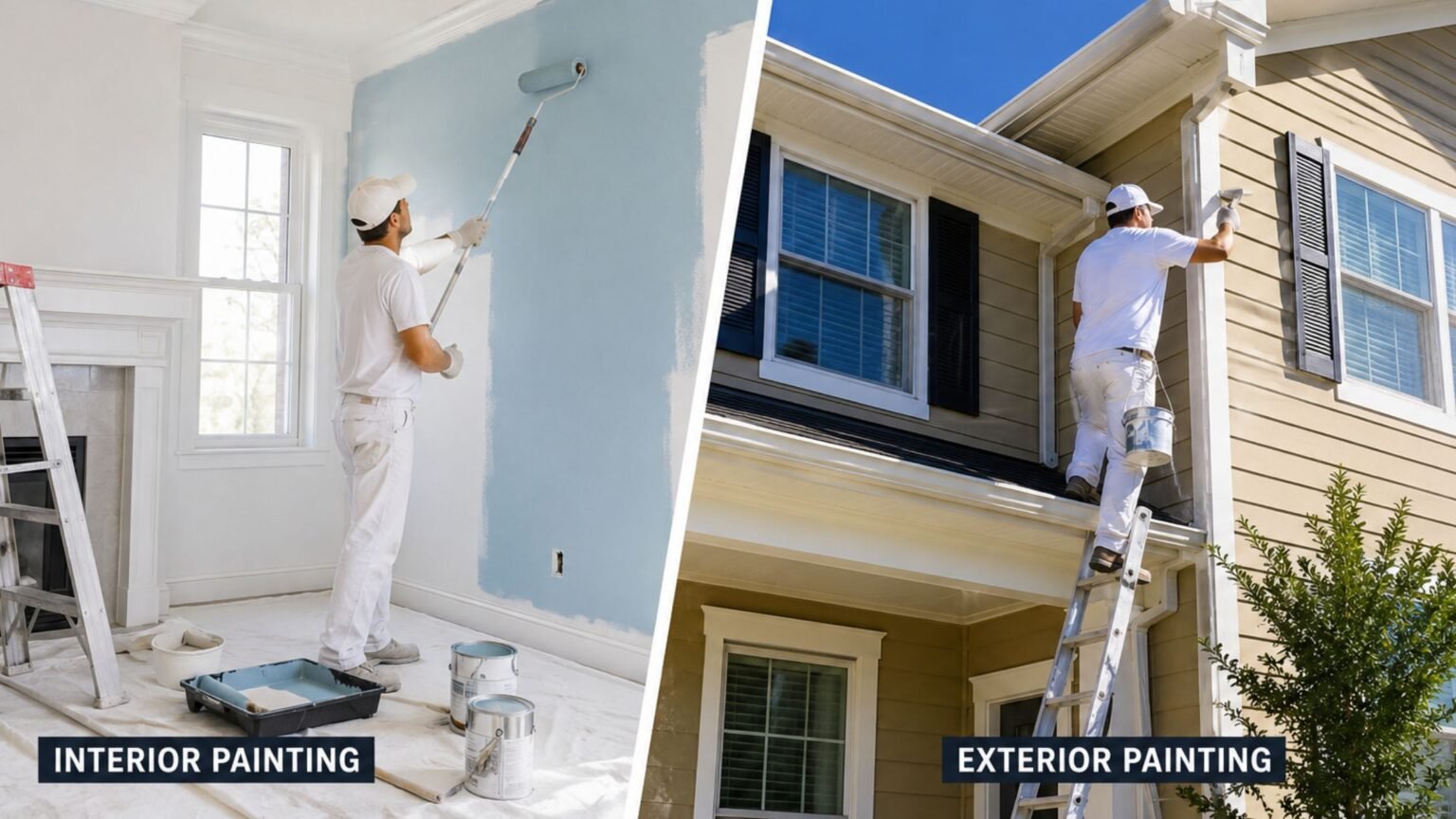
Painting is one of the most effective ways to maintain and update a home. However, many homeowners assume that all painting projects follow the same process. While both interior and exterior painting involve applying paint to surfaces, they differ significantly in terms of materials, preparation methods, environmental exposure, and maintenance requirements.
Understanding these differences can help homeowners make informed decisions when planning future projects. Whether you are refreshing your living room or maintaining your home’s exterior, knowing the purpose behind each type of painting is essential for achieving long-lasting results.
The Purpose of Interior and Exterior Painting
The primary goal of interior painting is to improve the appearance of indoor spaces while protecting walls and ceilings from everyday wear and tear.
Exterior painting, on the other hand, focuses on protecting the outside surfaces of a property from environmental elements such as sunlight, rain, wind, and temperature changes.
Although both services improve a home’s appearance, they are designed to solve different challenges.
Different Types of Paint Are Used
One of the biggest differences between interior and exterior painting is the type of paint itself.
Interior paint is designed for indoor environments where temperature and moisture levels are relatively stable. These paints are created to resist stains, scuffs, and regular cleaning.
Exterior paint is specifically formulated to withstand changing weather conditions. It contains ingredients that help protect against:
- UV rays
- Rain
- Moisture
- Temperature fluctuations
- Dirt accumulation
- Temperature fluctuations
Surface Preparation Is Different
Proper preparation is one of the most important steps in any painting project.
Interior painting usually involves:
- Filling holes and cracks
- Repairing drywall damage
- Sanding uneven surfaces
- Cleaning walls
- Applying primer when necessary
Exterior painting often requires more extensive preparation because outdoor surfaces are exposed to harsh conditions year-round.
Exterior preparation may include:
- Pressure washing
- Scraping loose paint
- Removing mould or mildew
- Repairing damaged wood
- Caulking gaps
- Applying weather-resistant primer
The preparation process often determines how long the paint will last.
Environmental Factors Play a Major Role
Interior painting can usually be completed year-round because indoor temperatures are controlled.
Exterior painting depends heavily on weather conditions.
Factors that can affect exterior projects include:
Temperature
Extreme temperatures may prevent paint from curing properly.
Rain
Moisture can interfere with paint adhesion.
Humidity
High humidity may extend drying times.
Sunlight
Direct sunlight can affect application consistency.
Professional painters carefully monitor weather conditions before beginning exterior projects.
As companies such as I Live to Paint understand, evaluating environmental conditions before starting a project helps achieve better long-term results.
The Equipment Used Can Vary
Interior and exterior projects often require different tools.
Interior painting commonly uses:
- Paint rollers
- Smaller brushes
- Drop cloths
- Extension poles
- Painter's tape
- Applying weather-resistant primer
Exterior painting may require:
- Ladders
- Scaffolding
- Pressure washers
- Larger rollers
- Industrial sprayers
The size and accessibility of exterior surfaces often make these projects more complex.
Paint Finishes Are Selected Differently
Paint finishes influence both appearance and durability.
Popular interior finishes include:
Matte Finish
Often used in bedrooms and ceilings.
Eggshell Finish
Suitable for living rooms and dining areas.
Satin Finish
Works well in hallways and family rooms.
Semi-Gloss Finish
Commonly used in kitchens and bathrooms.
Exterior paint usually comes in finishes designed to resist moisture and withstand environmental exposure.
Selecting the appropriate finish helps maintain the appearance of the property over time.
Maintenance Requirements Are Not the Same
Interior surfaces experience everyday use but are generally protected from outdoor conditions.
Interior walls may only require occasional cleaning and touch-ups.
Exterior surfaces need more frequent inspections because they are constantly exposed to:
- Sunlight
- Rain
- Snow
- Wind
- Dust
Signs that exterior paint may need attention include:
- Peeling paint
- Cracking
- Fading colours
- Moisture damage
- Wood deterioration
Regular maintenance helps prevent more expensive repairs in the future.
Project Timelines Can Differ
Interior projects are often easier to schedule because they are not affected by weather conditions.
The timeline depends on:
- Number of rooms
- Surface condition
- Ceiling height
- Drying times
Exterior projects may take longer because of additional preparation and environmental factors.
Large homes may require several days to complete, especially if extensive repairs are needed beforehand.
Proper planning allows projects to progress more efficiently.
Which Project Should Homeowners Prioritize?
The answer depends on the current condition of the property.
If interior walls are damaged, stained, or outdated, interior painting may be the priority.
If you notice exterior issues such as peeling paint or fading colours, exterior painting should be addressed sooner to protect the structure of the home.
Homeowners should inspect their property regularly and identify areas that require attention.
Consulting experienced professionals can help determine which project should come first.
As part of their assessment process, teams such as I Live to Paint evaluate the condition of surfaces before recommending appropriate painting solutions.
Why Professional Preparation Matters
Many homeowners underestimate the importance of preparation.
Applying paint without proper surface preparation often leads to:
- Uneven finishes
- Early peeling
- Reduced durability
- Poor adhesion
Professional painters understand the preparation requirements for different surfaces and environments.
This approach helps achieve more consistent results and extends the lifespan of the paint.
Final Thoughts
Although both services involve applying paint, Interior Painting vs Exterior Painting is much more than an aesthetic comparison.
Each project requires different materials, preparation techniques, equipment, and maintenance strategies. Understanding these differences helps homeowners make informed decisions that protect their property and maintain its appearance over time.
Whether you are updating indoor living spaces or protecting your home’s exterior surfaces, choosing the right approach is essential.
If you are uncertain about where to begin, consulting experienced local professionals can help you prioritise projects according to your home’s specific needs. Teams such as I Live to Paint provide guidance based on the condition of residential properties and the requirements of each project.